A One-Day District In-Service
Your AI answer, delivered in one in-service day.
You've got an in-service day on the calendar, a state AI mandate to answer, and parents asking hard questions about screens. Meanwhile, 82% of teachers say they've received no real guidance at all. This day changes that. Not another tool rollout. A working answer to the question underneath it all: if AI does the knowledge work, what do we teach kids to make, build, and judge?
One day. One price. $4,500 to start, plus travel.
Every district we talk to is holding the same three things at once: a state AI mandate with a deadline, a parent community pushing back on screens, and teachers who've been left to figure out AI on their own.
The easy answer is a tool-training day. Somebody demos a chatbot, teachers get logins, everyone nods. And by October it's forgotten, because it never answered the real question.
The real question is what school is for when AI can generate the essay, the code, and the lesson plan. And the answer is the strongest position your district can take: the durable human skills. Creating. Judging. Building. Defending your work out loud. Solving problems that don't have an answer key. PwC found entry-level roles exposed to AI are now 7x more likely to require creativity, judgment, and leadership. Human skills aren't the consolation prize. They're the moat, and it gets deeper every time AI gets better.
This isn't an AI-tools problem. It's an assignment-design problem. And the fix is older than the threat: making, process, defense, engagement.
The Human Skills Day builds the moat one assignment at a time, starting with the ones your teachers already give.
Teachers experience before they're asked to teach. Every block produces a visible artifact. Hands move before 10am. And the day ends in a commitment small enough to survive Monday.
A 30-minute leadership intake call, plus a 10-question teacher survey. Their answers get quoted (anonymously) in the keynote, so the room hears itself in the first ten minutes. And every teacher brings one real assignment they currently give. The whole day operates on it.
Coffee, and a gallery wall. Teachers post the assignment they brought under one of two signs: "AI can probably do this" or "AI can't touch this." No talk track. The wall does the arguing, and we come back to it at the end of the day.
Three evidence beats, one story each: the MIT brain-scan study (the ChatGPT group couldn't recall their own essays), the Brookings doom loop, and PwC's 7x durable-skills flip. Then the turn: this is not an AI-tools problem, it's an assignment-design problem, and the fix is older than the threat. No tool demos. 60 minutes, hard stop.
A full design-thinking cycle in 75 minutes. Cardboard, tape, markers, a $50 materials bin. No tech on purpose: this pedagogy runs in any cafeteria. Teachers interview, frame, prototype, and give a 2-minute defense to a neighboring team. Then we name what just happened to them, because they felt it before we explained it.
We walk the durable-skills rubric in ten minutes. Then each teacher scores the assignment they brought against it. Solo. Honestly. Then the table question: "What would move your assignment one column right?" This is the moment the day stops being a speech.
Using the redesign template, every teacher rebuilds the assignment they brought: a process checkpoint, a defense moment, a making component where it's honest, and AI's role decided out loud — banned, material, or sparring partner. Grade-band tables, so the kindergarten teacher isn't drowned by AP Physics. Pairs trade work for warm/cool feedback, then revise.
Teachers feed their redesigned assignment to an AI and try to make it do the work. If AI produces a passable result, back to the template to tighten the process and defense. This is the only block where screens open, and it's adversarial by design: teachers leave having judged AI output — the exact muscle their students need.
Not a vague action plan. Three commitments on one page: the redesigned assignment runs within 10 school days, one artifact of student process comes back to the 30-day call, and each table names a point person for their building. Your admin closes with what they'll do: cover, materials, the board update. Then we go back to the Wall and physically move the assignments that just changed columns.
Admins only, 30 minutes. The rubric as your board and parent story, the 30-day plan, and the pre/post numbers you'll be able to show. This is where the day becomes a strategy instead of an event.
The contracted call a month later. Student work comes back, we review it together, and we name 2-3 wins your district can publish internally. Because PD that ends at 3:30pm on day one is how makerspaces became trophy rooms.
The day ends. The artifacts don't. And nobody gets a binder.
Rebuilt through the five shifts, red-teamed against AI, and scheduled to run within 10 school days. Real work, upgraded — not a new program.
One page, aligned to your state's AI guidance. This is the artifact your superintendent shows the board.
The same template from the studio, ready for every assignment and unit your teachers touch next.
Teacher confidence and rubric scores, morning vs. redesigned. "Our assignments moved an average of X columns" is a board slide, not a feeling.
One teacher per table who volunteered to carry this in their building. Your implementation cohort, named before anyone left the room.
Student work comes back, we review it together, and your district gets 2-3 documented wins to publish.
One problem. One product. One price.
Fixed price, fixed scope. The intake call, the teacher survey, the full day (up to 40 teachers), every artifact above, materials included, and the 30-day check-in. No proposals that take three weeks. No scope creep. One contract term worth knowing up front: your building admins are in the room all day, participating. PD follow-through dies without it, so we put it in writing.
Popular add-on — The Parent Evening: the keynote's parent version, same evening, flat fee. Your loudest stakeholders get their questions answered before the next board meeting does it for them.
Deliberately not included: AI tool training, custom curriculum writing, and year-long coaching retainers. If your district needs those after the day, we'll talk. But the day stands on its own.
Bring It to Your District
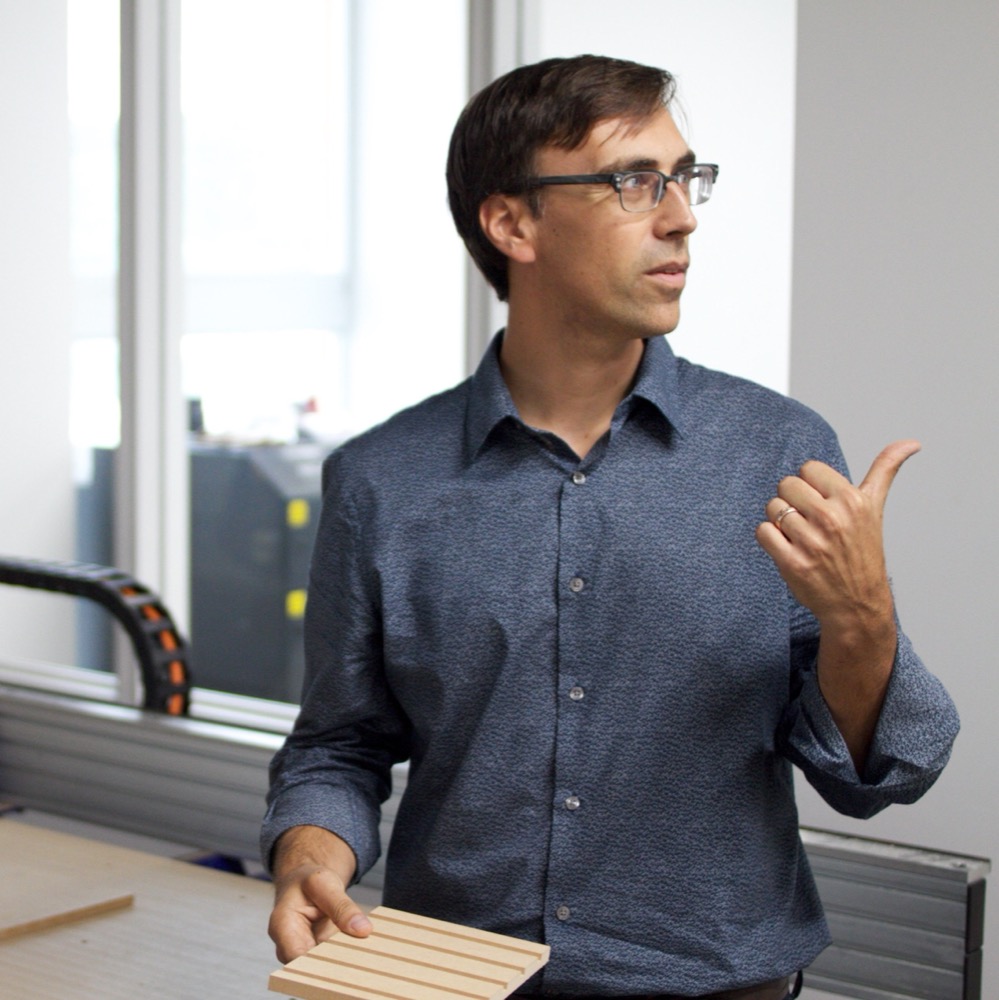
Mark Schreiber has spent 28 years teaching exactly this. He built the 8,000 sq/ft innovation suite at American School in Japan, created Intel's Future Skills curriculum (500+ sites worldwide), and won a Milken Award doing it. Today he's a professor at Colorado State University's Richardson Design Center, where his students use design thinking and AI to go from idea to working prototype in a single class.
He's not a consultant who found education. He's a teacher who's run this exact playbook through every tool wave since scissors and cardboard. Your teachers will notice the difference in the first ten minutes.
"After learning about Mark's pioneering work leading the maker movement at American School in Japan, we sought out his expertise at Moses Brown. Mark advised us expertly. Now a year later, I can confidently say that our collaboration with Mark was a critical part of our success. But be forewarned: he has about 100 good ideas a minute!"
Matt Glendinning, Head of School, Moses Brown
The one-page durable-skills rubric, aligned to your state's AI guidance. It's the same artifact districts keep after the day. Free. We email it to you personally.
Tell us about your district and the in-service dates you're working with. We'll reply within a day with next steps and honest answers, including whether this day is the right fit. If it isn't, we'll say so.
Or reach out directly: mark at designcase.co