Innovation Consulting for K-12 Schools & Districts
Human skills are the moat AI can't cross.
I've spent 28 years helping schools build thinking environments. Scissors, then laser cutters, then 3D printers, now AI. Every wave, the same thing held true: the tool was never the point. The thinking was. Now AI is doing the knowledge work, and every district is staring at the same question. If AI can generate the answers, what do we teach kids to make, build, and judge? The schools that answer it are building a moat that gets deeper every time AI gets better.
One day. One price. $4,500 to start.
Every time a new tool arrived in education, the best schools asked the same question: how do we use this to deepen the work we already believe in?
They built the thinking environment first. Trained the teachers. Designed curriculum that builds judgment alongside capability. Then added the tools. The results? Students who don't just use AI. They direct it.
The schools that skipped this step? 40-60% of their makerspaces ended up underutilized. TechShop went bankrupt. Now AI is producing "slop" at the same rate laser cutters produced "crapjects." The pattern is predictable. So is the solution.
And the hiring data just raised the stakes. PwC found that entry-level roles exposed to AI are now 7x more likely to require creativity, judgment, and leadership. The skills your students will be measured on are exactly the ones AI can't do. That's not a threat to your school. That's your moat, and it deepens every time AI gets better.
We built the programs that worked. From Intel's Future Skills (500+ sites worldwide) to the innovation suite at American School in Japan. The secret was never the equipment. It was the thinking behind it.
Build the moat: the spaces where students make, and the assignments that make them think.
Strategy, curriculum, training, and spaces. Not a slide deck.
Our flagship district in-service. The evidence case, a hands-on sprint, and every teacher leaving with a redesigned unit and a plan. $4,500 to start. See the full day →
Scope, sequence, lesson plans, and assessments built around durable skills: creating, judging, problem-framing. Not a template. The same approach deployed by Intel to 500+ sites worldwide.
Hands-on, collaborative, subject-specific. Teachers experience the pedagogy before they teach it. From half-day workshops to multi-day intensives, built so it's still in use in May.
From concept through construction docs. Working with architects, building committees, and heads of school to design makerspaces and innovation labs, plus the thinking environment that keeps them alive after the ribbon cutting.
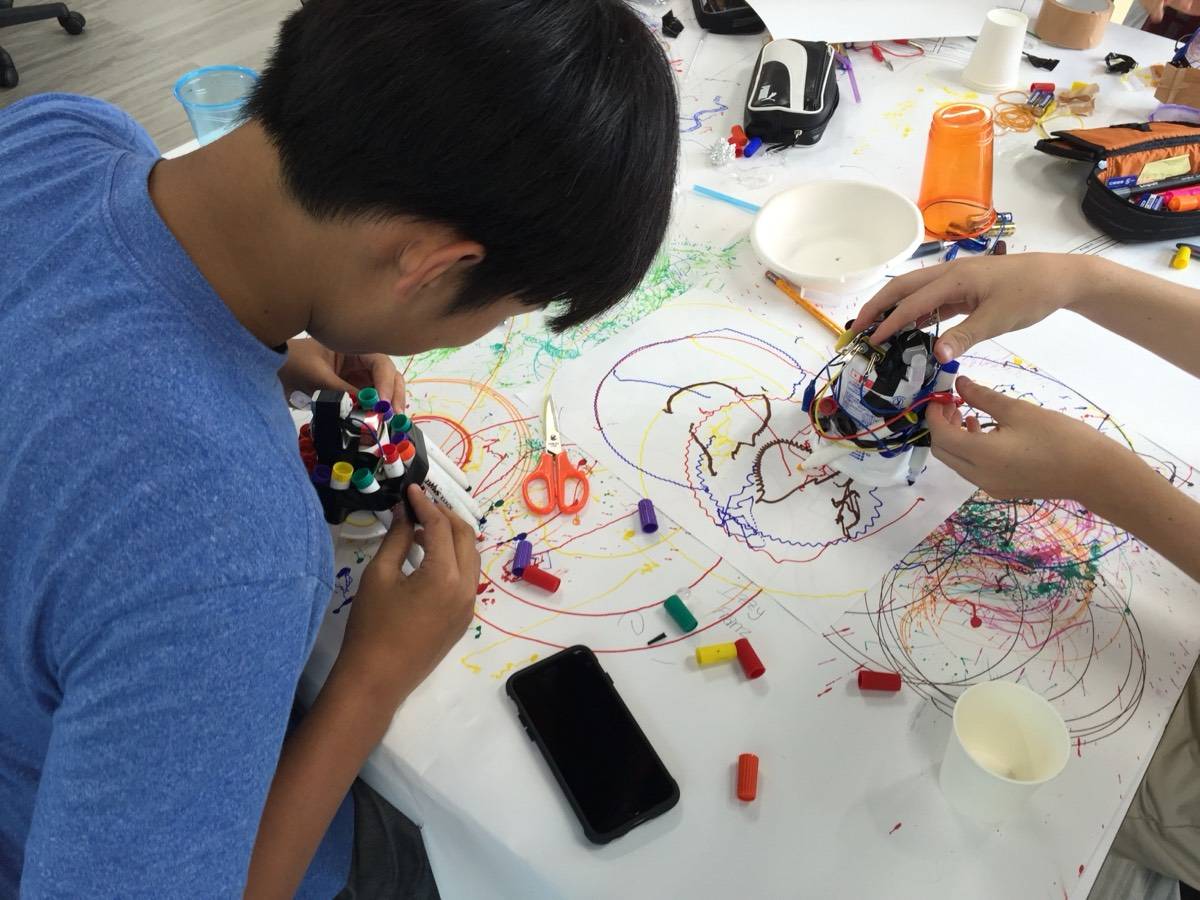
Students design, build, test, and launch real products. AI accelerates every step. When they scan the QR code on the pitch board, it goes to a working prototype. Not a poster.
"We've Seen This Movie Before" is the talk your faculty, board, or conference audience hasn't heard. Not another "AI is coming" presentation. A practitioner's case for what humans should learn next.
Mark Schreiber has spent 28 years helping people see what's possible and then build it. He designed 8,000 sq/ft of innovation suites at American School in Japan. Created Intel's Future Skills curriculum and watched it scale to 500+ sites worldwide. Won a Milken Award, and launched countless innovation programs along the way.
Today he teaches at Colorado State University's Richardson Design Center, where his students use design thinking and AI to go from idea to working prototype in a single class. The same classroom-tested approach he brings to your teachers. Not theory from a slide deck. Practice from last Tuesday.
Mark doesn't talk about innovation. He builds it.
And he's ready to help you do the same.
"After learning about Mark's pioneering work leading the maker movement at American School in Japan, we sought out his expertise at Moses Brown. Mark advised us expertly. Now a year later, I can confidently say that our collaboration with Mark was a critical part of our success. But be forewarned: he has about 100 good ideas a minute!"
Matt Glendinning, Head of School, Moses Brown
States are mandating AI policies. Parents are pushing back on screens. And employers just flipped the hiring equation.
State AI mandates are landing now, and 2026-27 in-service calendars are being set this summer. The districts that book fall PD answer the mandate before the board asks.
Start the ConversationA 30-minute call about your district, plus a 10-question teacher survey. Their answers get quoted (anonymously) in the keynote, so the room hears itself in the first ten minutes.
Hands move before 10am. Every block produces a visible artifact. Every teacher rebuilds a real assignment they brought, then tries to break it with AI. It runs within 10 school days.
You keep the durable-skills rubric, the redesign template, a point-person roster, and the pre/post numbers for your board. Plus the 30-day call where student work comes back.
A durable-skills rubric aligned to your state's AI guidance. What students should be able to make, judge, and create when AI does the knowledge work. Free. We email it to you personally.
The first conversation is always about your school, not our services. Tell us what's on the calendar, what your board and parents are asking, and where your teachers are stuck.
Or reach out directly: mark at designcase.co